Chapter 0
Remember
“These movements are for the rest of your life.”

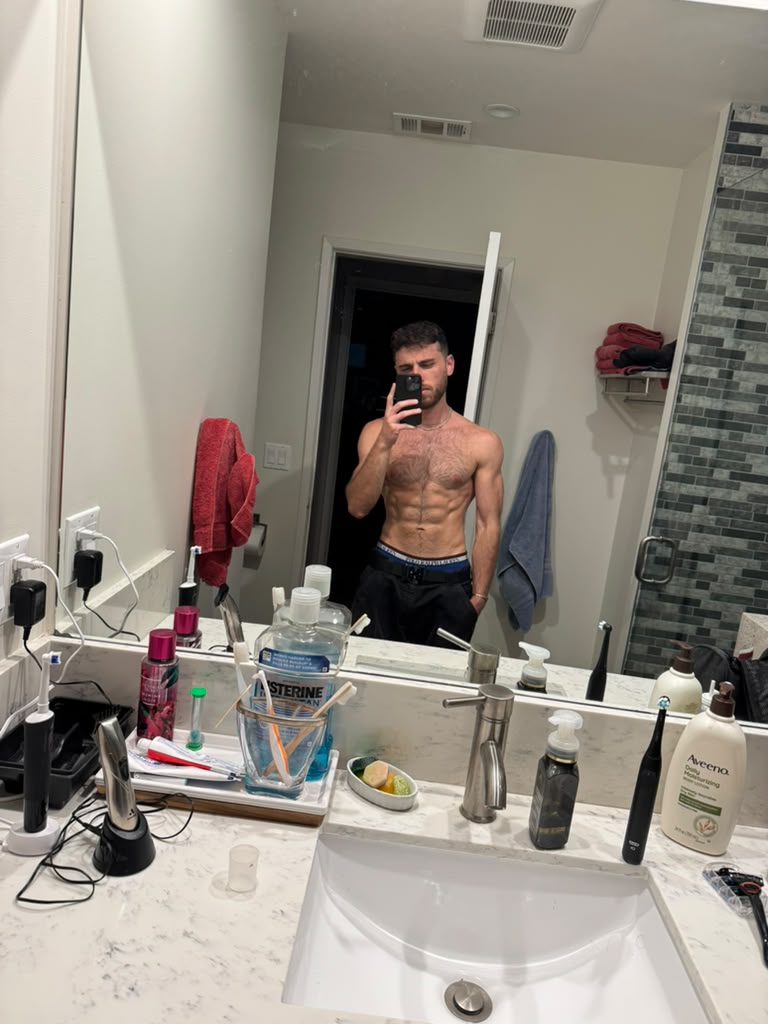
Don't get me wrong. I don't think I look bad in the first photo. But I do think I look better in the second one.
More importantly, I feel better. These movements have only changed my life for the better.
One year of deep, true work sits between those two images. A mix of training and deep tissue stretching, done in a way that creates honest resistance.
How This Started
It started when I realized I couldn't swing on a monkey bar anymore.
Not that I had gotten worse at it. I couldn't do it at all. And I couldn't tell you when that stopped being possible.
Here is the part that bothered me. I was never an athletic kid. I wasn't into exercise, I didn't train, I didn't do anything to build that strength. So how did I have it as a child, and how did I lose something I never worked for?
In April of 2025 I tried a real dead hang for the first time. I couldn't last 30 seconds.
I was 27. I had been in the gym on and off for about three years at that point. And I could not hold my own bodyweight from a bar without swinging around like I was trying to get off of it.
So I got back on the bar. Focused this time, actually paying attention to what my body was doing.
I did it every day for months. To failure every time. I never timed myself. Quietly, without me tracking any of it, my grip became my strongest muscle.
I wasn't doing it for a number. I was doing it for the sensation it unlocked in me.
Something was getting fixed.
Hanging Is Honest
We are meant to hang. Humans are brachiators, we have shoulders built to carry us through the air, and almost none of us ever use them that way anymore.
I think part of the reason is because its boring. And it doesn't feel like your conventional work out. But when you hang, and really load your wrists time after time after time, the rest of the movements follow. Seriously. Grabbing a bar and doing nothing is one of the least exciting things you can do in a gym. But that's the point.
It's honest. It's not glamorous.
Go try it right now. I mean it. Stop reading and go find a bar.
You can fake a bicep curl. You can't fake a front lever.
You have been doing chest day three times a week and calling it upper body training. Your shoulders disagree. This isn't an overtraining problem, it's the opposite one. You are underusing the exact range those joints were built for.
With a movement like this, if you are not strong enough, you fail. That's it. There is no partial range to hide inside, no momentum to borrow, no isolated machine version to swap in instead.
We don't mean to cheat. It's how the brain is wired, we look for comfort and we find it. But when there is no way to cheat, you just keep showing up until you actually get better.
And Then It Compounds
Ten grip reps a day becomes 300 in a month. Over 3,000 in a year.
When was the last time you did anything 3,000 times? The same exact way, with the same intent, over and over again.
That is the whole mechanism. Not intensity, not a program you white-knuckle for six weeks. Just a small, honest movement repeated so many times that your body has no choice but to change.
If You Only Do One Thing
Put a pull-up bar in the doorway on the way to your shower. Every morning, before you brush your teeth, dead hang for 30 seconds.
If you give up on every other page of this guide, do this. That is the whole program, and I promise your life will only get better for it.
How These Are Trained
A lot of what's ahead will resemble tai chi more than it resembles a workout. You slow everything down at first. You get the basics truly right. Truly.
And getting them truly right takes time and repetitions. Perfect repetitions.
There are explosive days too, and we'll get to those. They end up being some of the most fun you will have training, because you get to push yourself all the way to your body's limit in a way that is actually safe. It feels like leveling up in a real life video game.
Don't get impatient. It takes years to master a craft, and this is the most streamlined method I have found.
Remember that sometimes the shortest way is the longest way. Rushing toward the movements that look impressive is the slowest possible route to them. Building real strength and resilience in the foundation first gets you there faster, without injuries, and leaves you with the capacity to actually test your limits once things start getting complicated.
That is what the rest of this guide is.
Chapter Takeaway
These movements are for the rest of your life, so there is no rush and no reason to skip a step. The work is boring, it is honest, and it compounds. Start with the bar. Everything in this guide is built on top of it.
Hanging changed my life, it could change yours.